

Have you ever felt your own energy heavy and stagnant, as if something needed to shift for the flow of life to move lightly and freely again? That sensation, often subtle, is a call to look more closely at our integral well-being, which encompasses our inner universe. In this context, aromatherapy emerges as a luminous bridge between ancestral wisdom and contemporary scientific knowledge, offering natural and powerful tools for transformation.
Aromatherapy, with its age-old roots, is increasingly recognized for its ability to positively influence our physical, mental, and emotional state. It invites us to explore the power of aromas not only as a source of olfactory pleasure but as a sophisticated pathway to self-knowledge and healing. This complete guide was developed from “Deep Research” to present the central benefit of this fascinating practice: balancing the chakras through chakra essential oils, promoting profound inner well-being. Get ready to discover how essential oils can become precious allies on your journey of awakening and harmonization.
What Is Aromatherapy? The Science Behind Scent
Aromatherapy is a therapeutic practice that uses the properties of essential oils, volatile and highly concentrated plant extracts, to promote and restore physical, mental, and emotional health. Far from being just a way to scent spaces, aromatherapy is a branch of phytotherapy that is grounded in the complex chemistry of essential oils and their interaction with the human body.
The magic of aromatherapy lies largely in how our body processes aromas. When the odor molecules of essential oils are inhaled, they travel through the nasal passages to reach the olfactory receptors. These receptors then send signals directly to the limbic system, a primitive area of the brain often called the “emotional brain.” The limbic system includes structures such as the amygdala, responsible for processing emotions like fear and pleasure, and the hippocampus, which is crucial for the formation of memories.
This direct and immediate connection between smell and the limbic system is unique among our senses. This is why a particular aroma can evoke vivid memories or trigger intense emotional responses almost instantly, often before a person can consciously identify the scent. This neurological interaction allows essential oils to exert a significant influence on mood, helping reduce stress and anxiety, improve sleep quality, increase focus and concentration, and contribute to an overall state of emotional balance and well-being. Although absorption through the skin is another important pathway for essential oils, the influence of inhalation on the central nervous system is one of the scientific pillars that supports the effectiveness of aromatherapy for psycho-emotional concerns.
Understanding the 7 Chakras: Your Personal Energy Centers
The chakras, originating in ancient Indian traditions, especially Vedic texts, are centers of vital energy (prana or chi) located in the subtle body. The Sanskrit word “chakra” means “wheel” or “disk,” and they are visualized as spinning vortices of energy that regulate the energetic flow and influence various aspects of our physical, emotional, mental, and spiritual health. These centers are not physical in the anatomical sense, but they belong to a complex energetic anatomy that interpenetrates and influences the physical body.
The chakras are interconnected; an imbalance in one can affect the functioning of the others, creating a cascade effect throughout the entire energetic system. Although there are countless minor chakras, the system most commonly worked with in the West and in many holistic practices involves seven primary chakras aligned along the spine, from its base to the top of the head. Each of these energy centers is associated with different organs and glands of the physical body, as well as specific aspects of consciousness and psycho-spiritual development. Understanding the function of each chakra is the first step in identifying possible imbalances and using tools such as aromatherapy to restore harmony. The progression of the chakras, from root to crown, can be seen as a map of the human journey, from our most basic survival needs to spiritual realization and connection with universal consciousness.
Below is a table of the seven primary chakras, their characteristics and functions, for easy understanding and reference:
The 7 Primary Chakras
| Chakra (Sanskrit) | Portuguese Name | Primary Color | Element | Mantra (Sound) | Location | Primary Function |
|---|---|---|---|---|---|---|
| Muladhara | Chakra Raiz | Red | Earth | LAM | Base of the spine | Safety, stability, survival, connection with the Earth. |
| Svadhisthana | Chakra Sacral | Orange | Water | VAM | Below the navel (abdominal region) | Creativity, emotions, pleasure, sexuality, flow. |
| Manipura | Chakra Plexo Solar | Yellow | Fire | RAM | Stomach area (above the navel) | Personal power, self-esteem, identity, willpower, metabolism. |
| Anahata | Chakra Cardíaco | Green (or Pink) | Air | YAM | Center of the chest | Love, compassion, forgiveness, emotional balance, healing. |
| Vishuddha | Chakra Laríngeo | Sky Blue | Ether (Akasha) | HAM | Throat | Communication, truth, verbal creativity, hearing. |
| Ajna | Chakra Frontal (Terceiro Olho) | Indigo | Light | OM (or KSHAM) | Between the eyebrows | Intuition, perception, wisdom, mental clarity, visualization, imagination. |
| Sahasrara | Chakra Coronário | Violet (or White/Gold) | Thought (or Pure Consciousness) | Silence (or OM) | Top of the head | Connection with the Divine, enlightenment, unity. |
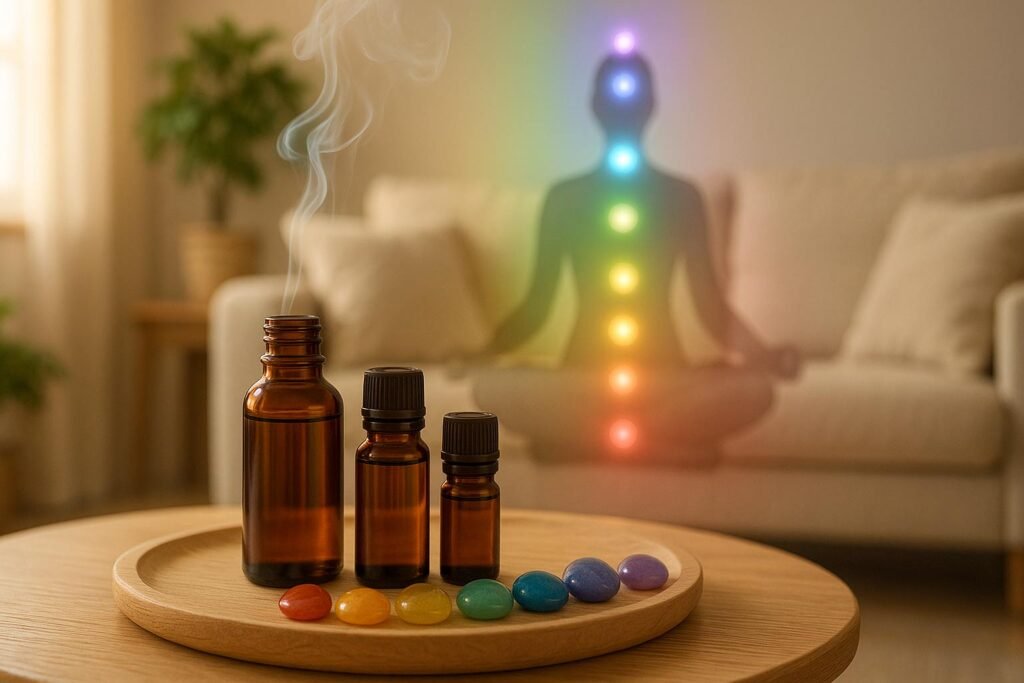
The association of each chakra with an element (Earth, Water, Fire, Air, Ether, Light, Thought) deepens the understanding of their energies, offering clues for balancing practices, including the choice of essential oils.
Practical Guide: The Best Essential Oils for Each Chakra
Aromatherapy and chakras are a powerful combination for self-knowledge and well-being. Essential oils, with unique vibrations and properties, help cleanse, balance, and energize the chakras. Each oil has an energetic signature that resonates with a specific chakra or helps correct imbalances. This guide presents the best essential oils for the chakras and practical ways to use them.
Root Chakra – Muladhara (I Am)
Function and Connection: Muladhara is the foundation of the chakra system. Located at the base of the spine, it governs safety, stability, belonging, and connection to the physical body and the material world. It is the center of survival instincts and our capacity to feel grounded and present.
Symptoms of Imbalance:
- Underactive (Deficient): Constant fear, generalized anxiety, insecurity, difficulty concentrating, a spacey or disconnected feeling from the body. There may be difficulty manifesting basic needs such as financial stability or a secure home, along with a sense of not belonging.
- Overactive (Excessive): Excessive attachment to material goods, greed, mental and behavioral rigidity, resistance to change, tendency toward obesity or lethargy.
Recommended Essential Oils and Why:
- Cedar (Cedrus atlantica): A robust, woody aroma that is deeply grounding, fostering security, stability, and inner strength, like a tree firmly rooted in the earth.
- Patchouli (Pogostemon cablin): With a earthy, exotic scent, Patchouli connects you to Earth energy, stabilizes body and mind, calms fears and anxieties, and brings comfort and safety.
- Vetiver (Vetiveria zizanoides): Known as the “oil of tranquility,” Vetiver is one of the most grounding oils. It helps you come back into the body, soothes a restless mind, and is especially helpful during shock or trauma.
- Olibanum/Frankincense (Boswellia carterii): Though often linked to upper chakras, its ancient resin carries a protective, sacred vibration and earth-anchoring quality that supports stability and grounding.
Ways to Use:
- Massage: Dilute 1–2 drops in 1 tablespoon of a carrier oil (such as coconut or sweet almond). Massage the soles of the feet, base of the spine, or legs, visualizing roots growing toward the center of the Earth.
- Diffuser: Add 3–5 drops to a diffuser to create a safe, stable, and welcoming atmosphere.
- Direct Inhalation: Place 1 drop in the palms, rub gently, and inhale deeply several times.
- Diffuser Necklace: Use 1 drop on a diffuser necklace to feel supported and grounded throughout the day.
Sacral Chakra: Svadhisthana (I Feel)
Function and Connection: Located below the navel, Svadhisthana is the center of creativity, emotions, pleasure, sexuality, sensuality, and relationships. It governs energetic flow, flexibility, and adaptability to life’s changes.
Signs of Imbalance:
- Underactive: Low libido, creative blocks, apathy, fear of intimacy, emotional repression, rigidity, difficulty feeling pleasure or everyday joy.
- Overactive: Emotional extremes, emotional dependency, addictions (food, sex, substances), relentless pursuit of pleasure, manipulation, excessive drama.
Recommended Essential Oils and Why:
- Ylang Ylang (Cananga odorata): Sweet, floral, exotic. Sensual, euphoric; supports self-acceptance, joy, connection to the senses, and ease.
- Sandalwood (Santalum album): Woody, sweet, balsamic. Calming, meditative; nurtures sacred intimacy and spiritual connection through sensuality.
- Sweet Orange (Citrus sinensis): Bright, citrusy. Uplifting, sparks creativity and spontaneity, releases stagnant emotions.
- Tangerine (Citrus reticulata): Light, cheerful. Encourages joy, ease, reduces stress, supports creative expression.
Ways to Use:
- Aromatic Bath: Add 5–7 drops pre-diluted in whole milk, honey, or unscented liquid soap to warm bathwater.
- Abdominal Massage: Dilute 1–2 drops in a carrier oil and massage below the navel with gentle clockwise circles.
- Diffuser: Use to encourage creativity, joy, and a sensual, welcoming atmosphere.
Solar Plexus Chakra: Manipura (I Do)
Function and Connection: Located in the stomach area above the navel, Manipura is the center of personal power, self-esteem, identity, willpower, self-discipline, and energy metabolism. It governs our ability to act, manifest intentions, and take control of our lives.
Signs of Imbalance:
- Underactive: Low self-esteem, feelings of inferiority, indecision, passivity, victim mentality, lack of initiative, digestive issues.
- Overactive: Controlling or authoritarian behavior, stubbornness, irritability, frequent anger, workaholism, aggression, ulcers or gastritis.
Recommended Essential Oils and Why:
- Lemon (Citrus limon): Bright, citrusy. Energizing, cleansing, clarifying; boosts focus, optimism, and confidence.
- Ginger (Zingiber officinale): Warm, spicy. Strengthening, stimulating; ignites inner fire (Agni), supports courage, initiative, and digestion.
- Rosemary (Rosmarinus officinalis): Herbal, stimulating. Enhances mental clarity, memory, confidence, and decisive action.
- Lemongrass (Cymbopogon citratus): Fresh, citrusy. Purifying, revitalizing; releases limiting feelings and negativity.
Ways to Use:
- Morning Inhalation: Inhale from the bottle with care or from a tissue with 1 drop to start the day with energy, focus, and confidence.
- Work or Study Diffuser: Supports concentration, productivity, and willpower.
- Stomach Area Massage: Dilute 1–2 drops in a carrier oil and massage the solar plexus clockwise to stimulate digestion and personal power.
Heart Chakra: Anahata (I Love)
Function and Connection: Located at the center of the chest, Anahata is the center of love, compassion, forgiveness, empathy, harmonious relationships, and emotional balance. It functions as a bridge between the lower chakras (more physical and earthly) and the upper chakras (more spiritual and etheric).
Signs of Imbalance:
- Underactive: Difficulty giving or receiving love, social isolation, fear of rejection, resentment, bitterness, deep sadness, depression, weakened immunity, difficulty forgiving.
- Overactive: Excessive jealousy, possessiveness, codependency, weak boundaries, self-sacrifice to the point of exhaustion, harsh criticism.
Recommended Essential Oils and Why:
- Rose (Rosa damascena): Often called a high-vibration oil and a prime harmonizer for the heart. Supports self-love, unconditional love, compassion, and healing of deep emotional wounds. Some sources list it for the crown chakra, likely an error, since its heart-opening qualities are closely tied to Anahata.
- Geranium (Pelargonium graveolens): The “oil of love and trust.” Balances emotions, eases anxiety, and supports emotional healing and relationship trust.
- Bergamot (Citrus bergamia): Uplifts mood, encourages self-acceptance and optimism, and helps open the heart with lightness.
- Eucalyptus (E. globulus or E. radiata): Used by some traditions to energetically clear the chest area, creating space for freer breathing and healthier emotional expression. Here it is used more for “creating space” than for directly stimulating love like Rose.
Ways to Use:
- Chest Application: Dilute 1 drop in a little carrier oil and apply gently over the heart center with circular motions.
- Diffuser: Create a loving, compassionate, and harmonious atmosphere.
- Personal Perfume: Dilute a few drops in carrier oil and wear on the wrists and over the heart to carry loving energy through the day.
Throat Chakra: Vishuddha (I Speak)
Function and Connection: Located at the throat, Vishuddha is the center of communication, self-expression, truth, verbal creativity, listening, and attunement to intuition and inner wisdom.
Signs of Imbalance:
- Underactive: Difficulty speaking, fear of public speaking, excessive shyness, weak or hesitant voice, inability to say no or set boundaries, habit of “swallowing” feelings.
- Overactive: Excessive talking without listening, gossip, destructive criticism, inability to keep secrets, dogmatism, overly loud or aggressive voice.
Recommended Essential Oils and Why:
- Eucalyptus (E. globulus or E. radiata): Fresh, penetrating aroma that helps clear and open the channels of communication, promoting clear and assertive expression.
- Peppermint (Mentha piperita): Refreshing and stimulating; sharpens the mind for precise and objective communication.
- Roman Chamomile (Anthemis nobilis): Calming and gentle; supports expressing emotions and truths peacefully, especially when fear or suppressed anger is present.
- Tea Tree (Melaleuca alternifolia): Purifying; helps clear energetic blockages in expression and strengthens confidence to speak one’s truth.
Ways to Use:
- Steam Inhalation: Add 1 to 2 drops to a bowl of hot (not boiling) water, cover the head with a towel, and inhale with eyes closed for a few minutes to support throat and mental clarity.
- Throat Application: Dilute 1 drop in carrier oil and apply gently over the throat area.
- Diffuser: Use during important conversations, meetings, or periods of study and writing to facilitate clear expression.
Third Eye Chakra: Ajna (I See)
Function and Connection: Located at the center of the forehead between the eyebrows, Ajna is the center of intuition, extrasensory perception, wisdom, mental clarity, visualization, imagination, and connection with the Higher Self.
Signs of Imbalance:
- Underactive: Lack of intuition, difficulty visualizing, mental confusion, excessive skepticism, memory problems, frequent headaches, feeling lost or without direction.
- Overactive: Excess of thoughts or mental noise, weak concentration, hallucinations, disturbing nightmares, disconnection from practical reality, intellectual arrogance, mental rigidity.
Recommended Essential Oils and Why:
- Lavender (Lavandula angustifolia): Calming and balancing, quiets overthinking and opens space for intuition and insight.
- Rosemary (Rosmarinus officinalis): Sharpens clarity, concentration, and memory; heightens perception to see beyond appearances.
- Sandalwood (Santalum album): Deeply meditative; quiets mental chatter, deepens introspection, supports spiritual connection, and fosters inner clarity and wisdom.
- Basil (Ocimum basilicum): Revitalizes the mind, eases mental fatigue, promotes clarity, helps focus and discern intuitive information.
Ways to Use:
- Third Eye Application: Highly dilute 1 drop in 1 teaspoon carrier oil and apply a minimal amount between the eyebrows before meditation. Avoid eyes.
- Diffuser: Use during meditation, visualization, study, or any activity requiring focus and intuition.
- Inhalation: Inhale from the bottle or a tissue for quick mental clarity.
Crown Chakra: Sahasrara (I Understand / I Am Connected)
Function and Connection: Located at the top of the head, Sahasrara is the center of spirituality, divine connection, universal consciousness, ego transcendence, enlightenment, and higher wisdom. It is the portal to our higher spiritual nature.
Signs of Imbalance:
- Underactive: Spiritual disconnection, lack of purpose, excessive materialism, existential depression, cynicism toward spirituality, fear of death, sense of spiritual abandonment.
- Overactive: Disconnection from physical reality and responsibilities, spiritual fanaticism, confusion, over-intellectualization without practical embodiment.
Recommended Essential Oils and Why:
- Frankincense (Boswellia carterii): Deeply meditative; facilitates divine connection, supports inner peace, transcendence, and expanded awareness.
- Sandalwood (Santalum album): Profoundly meditative; calms the mind and elevates consciousness for subtler spiritual connection.
- Lavender (Lavandula angustifolia): Calming and purifying; prepares mind and spirit for deep meditation and spiritual connection, bringing serenity and peace.
- Lotus (Nelumbo nucifera): Symbol of spiritual purity, enlightenment, and transcendence. Often available as an absolute or synergy, regarded as highly elevating. Alternatives with similar “vibration” include myrrh or elemi.
Ways to Use:
- Diffuser: Use during meditation, prayer, yoga, or moments of introspection and spiritual connection.
- Crown Application: Dilute 1 drop in carrier oil and gently massage the crown.
- Auric Spray: Add a few drops to distilled water with a little grain alcohol in a spray bottle, then mist around the head and body as a sacred mist.
The choice of oils for chakras considers energetic interactions to address imbalances. Conscious application through massage, diffusion, inhalation, or aromatic baths makes aromatherapy personalized, connecting each person with healing essences.
Best Practices in Aromatherapy
Essential oils are potent and require safe, informed use. Because they are concentrated, correct use helps prevent adverse reactions. “Natural” does not mean “harmless.”
Quality Matters:
- 100% Pure and Natural Oils: Efficacy and safety depend on quality. Use 100% pure, natural oils with no synthetic additives, artificial fragrances, or undisclosed dilutions.
- How to Check (quick tips): Read the label for botanical name, plant part, origin, chemotype when applicable. Be wary of cheap oils. Research the brand.
Dilution Required for Topical Use:
- Avoid applying essential oils neat to the skin; they can cause irritation or burns. The rule is dilute, with rare exceptions (for example, Lavender, Tea Tree spot use).
- Carrier Oils: Dilute in carrier oils (cold-pressed vegetable oils such as fractionated coconut, sweet almond, jojoba) for safe topical use. They aid absorption and nourish the skin.
Suggested Dilution Rates (adults, general use):
- 1% dilution: 1 drop essential oil per 5 mL (1 teaspoon) carrier. Ideal for face, sensitive skin, or long-term daily use.
- 2–3% dilution: 2–3 drops per 5 mL carrier for larger areas or more targeted concerns.
- Higher concentrations (5–10%) may be used for localized, short-term applications, with caution and preferably under a professional’s guidance.
Patch Test:
- Before using a new oil, even diluted, do a sensitivity test. Apply a small diluted amount to the forearm or behind the ear. Cover and wait 24 hours. If there is no reaction such as redness or itching, it is safer to use.
Specific Precautions:
- Children: Use great caution. More sensitive systems and some contraindications apply. Use much lower dilutions (0.25–0.5%, depending on age and oil). Avoid in infants under 3–6 months. Consult a qualified professional.
- Pregnant and Nursing: Many oils are contraindicated, especially in the first trimester and during lactation. Components can affect the baby. Seek medical or qualified aromatherapist guidance.
- Pets: Dogs and especially cats metabolize oils differently. Many oils are toxic, even diffused. Cats are highly sensitive. Research carefully and consult an experienced veterinarian.
- Preexisting Medical Conditions: If you have asthma, epilepsy, blood pressure or clotting issues, or take medications, consult a health professional due to possible interactions.
- Phototoxicity: Some oils, mainly cold-pressed citrus (for example, Lemon, Bergamot), are photosensitizing. If applied to skin exposed to sun/UV within 12–18 hours, they may cause burns or pigmentation. Check whether the oil is phototoxic. Steam-distilled citrus oils are generally not.
Proper Storage:
- Store in amber glass, tightly sealed, away from light, heat, and humidity. Keep out of reach of children and pets.
Let the aromas of nature guide you on a journey to rediscover your inner balance. You do not need to do everything at once. The invitation is to take the first step, perhaps by choosing the chakra that resonates most with your current needs.
Which chakra will you begin to balance today with the magic of aromas? Share in the comments. We would love to hear how aromatherapy is awakening your well-being and transforming your life.