

Updated on October 20, 2026.
In this article
Introduction
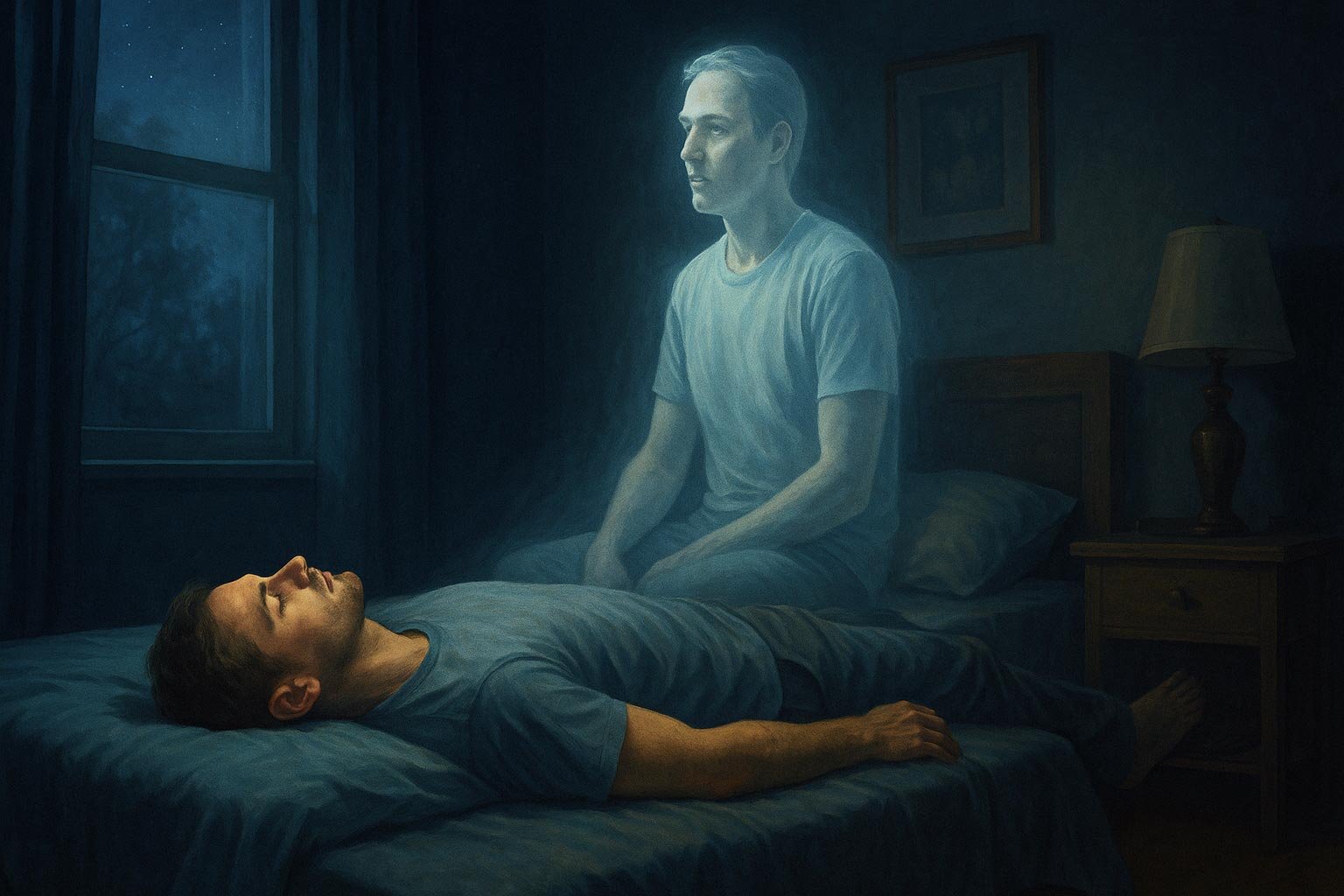
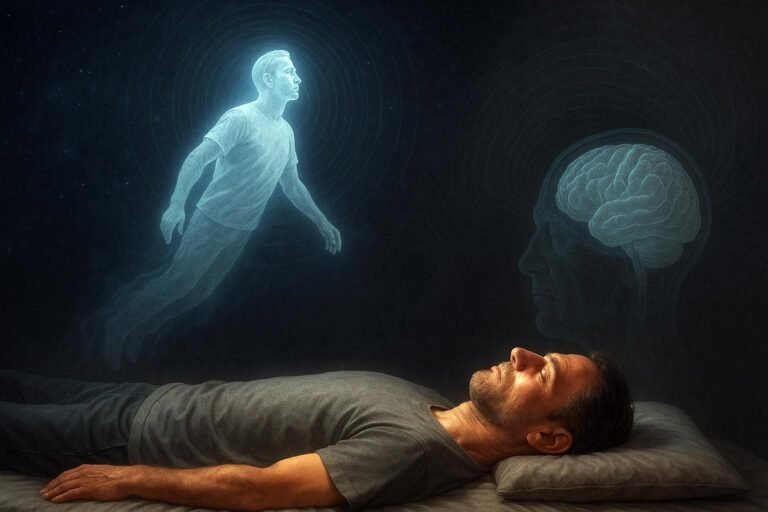
Astral projection—also called astral travel or out-of-body experience (OBE)—is the phenomenon in which consciousness seemingly detaches from the physical body and explores other planes or dimensions. Over time, various authors and researchers have developed techniques to induce conscious astral projections. In this research, we deeply investigate which methods yield the best results for beginners, based on widespread reports of success. We consider popular techniques (such as those of Robert Monroe and Robert Bruce), evaluations of their clarity and difficulty, average time to achieve results, real testimonials from beginner practitioners in forums and communities, and recommended practices for energetic safety.
. It is important to emphasize that each person may react differently to these techniques—persistence and experimentation are essential to discovering the method that best suits each individual. Even so, certain methods stand out for the volume of positive feedback from novices. According to author Robert Monroe, it is possible to induce astral projections through specific relaxation and meditation techniques. Complementing this perspective, Brazilian researcher Waldo Vieira emphasizes the importance of energetic development and personal preparation as the foundations for lucid, safe projective experiences. Below, we present the primary astral projection techniques used by beginners, followed by a comparison and safety tips.
Main Astral Projection Techniques for Beginners
Robert Monroe’s Technique (The Classic Method)
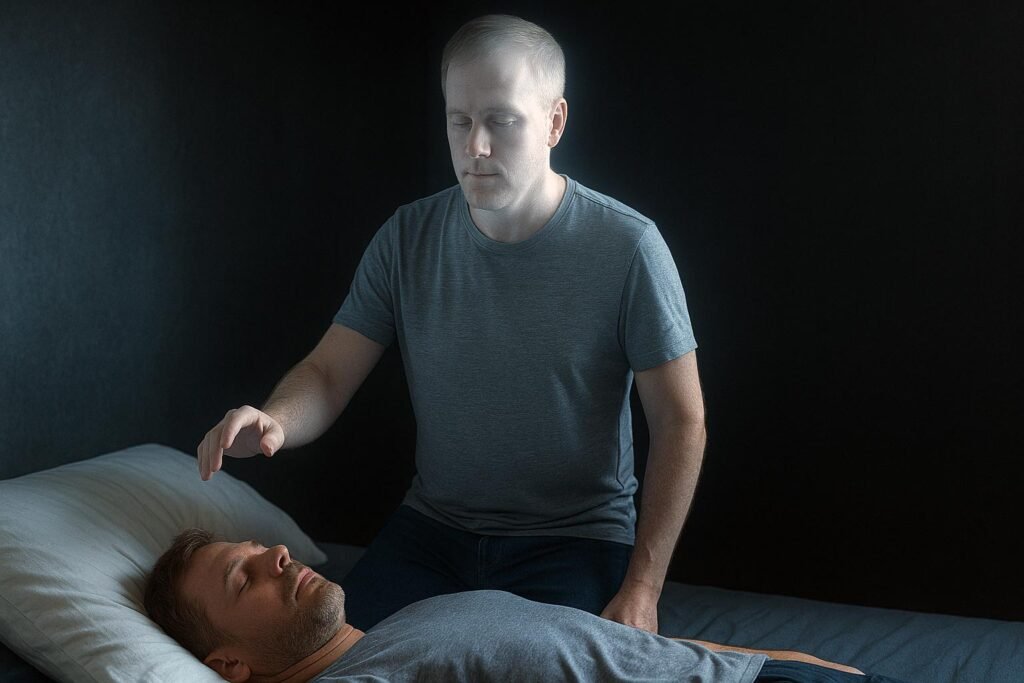
Robert A. Monroe was one of the pioneers in the modern study of astral projection. His classic technique involves inducing a state of mind awake/body asleep and then exiting the body. In summary, the steps include: deep relaxation of the body, entering the hypnagogic state (between wakefulness and sleep) while maintaining consciousness, deepening this state with a calm mind, inducing vibrations throughout the body, and, at the peak of the vibrations, executing an exit maneuver (such as “rolling” out of the body) (animamundiherbals.com). Monroe described that by intensifying and controlling the vibrations, the astral body loosens from the physical, thereby enabling conscious separation.
Assessment: Monroe’s technique is well-documented and clear, but it requires mastery of relaxation and patience to reach the vibrational state—something some beginners find challenging. Many practitioners use audio tracks with binaural beats (such as Hemi-Sync, created by The Monroe Institute) to help induce the appropriate mental state. In fact, the use of sound frequencies around 4 Hz (theta range, “body asleep”) was observed by The Monroe Institute to be effective in facilitating OBEs (en.wikipedia.org). Beginners report that Hemi-Sync tapes helped them achieve their first projections by teaching them how to position their consciousness in the correct state. Overall, Monroe’s technique has a moderate success rate among novices: many achieve results within a few weeks of regular practice, especially when combined with audio stimulation and a scheduled early-morning awakening (as discussed below). Others may need a few months before experiencing their first conscious exit. The advantage is that this method builds a solid foundation of mental concentration, which is useful in any technique.
Robert Bruce’s Rope Technique
The rope technique, proposed by Australian author Robert Bruce, is widely cited as the most suitable for beginners. It involves lying in a comfortable position and vividly imagining that there is a rope hanging above you. The projector then visualizes (and “feels”) their astral self gripping this rope with their hands and climbing upward, hand over hand, as if they were truly ascending. One must focus on the tactile sensations: feeling the tension of the rope in the hands and the lightness of pulling the body upward, ignoring any impressions from the physical body. This visualization creates an intense focal point outside the body, rapidly triggering the vibrational state and separation.
Assessment: The rope technique is extremely simple and direct, which enhances its clarity. It does not require visualizing complex scenes—only immersing oneself in the sensation of climbing. Because of this, it is accessible even to those who struggle with mental imagery. According to descriptions, this technique is “extraordinarily successful in inducing an astral projection, even in people who had been struggling for a long time without results” (habbonight.com.br). Beginners frequently report success with the rope method after just a few weeks or even days of dedicated attempts. For example, one practitioner shared that she spent days trying to project without success, repeatedly waking up terrified with sleep paralysis, until she applied the rope technique and finally managed to achieve astral travel (habbonight.com.br). Another novice projector reported entering deep relaxation and imagining climbing the rope every night; after several attempts, he suddenly felt intense vertigo and detached from his body, achieving his first OBE. These testimonials demonstrate that the technique produces rapid effects (sensations of swaying, vertigo, and disconnection) when executed correctly, making it common to achieve some degree of conscious exit within the first weeks of practice. It is worth noting that the practitioner must remain calm upon feeling vibrations or dizziness so as not to interrupt the process. In short, the rope method is considered to have low difficulty and a high success rate among beginners, which is why it appears on virtually every list of recommended projective techniques.

Vibrational State Technique (William Buhlman and Waldo Vieira)
Another effective approach for beginners is focusing on the Vibrational State (VS) —a term used for the peak of energetic vibrations in the subtle body, which facilitates astral separation. Authors such as American researcher William Buhlman have popularized methods for voluntarily inducing these vibrations. The practice involves relaxing, entering a light trance, and concentrating on feeling energy moving through the body. A common way to do this is to imagine a point of energy sweeping up and down through your body, repeatedly and at an increasing speed, until you feel a uniform vibration in every cell. This technique of energetic circulation (also taught in Waldo Vieira’s Projectiology) can be done before falling asleep or at the start of a projection attempt. When the vibrations arise intensely, the projector focuses on expanding this vibrational state or lifting their consciousness out of the body along with the vibrations. Many combine the VS with an exit visualization (such as floating or rolling).
Assessment: Inducing the vibrational state requires good concentration, but it is a technique that brings benefits in itself: even if projection does not occur immediately, the practitioner learns to master their own energies and quiet the mind for future attempts. Beginners report that after a few minutes of energy work, they begin to feel tingling, waves of energy, or a numbness in the physical body—signs that detachment is being facilitated (ippb.org.br). Once strong vibrations take hold, the exit can occur almost spontaneously or with a slight push of will (such as imagining floating). In terms of difficulty, the VS technique is considered moderate: the instructions are relatively straightforward, yet some individuals may require days or weeks of daily practice before they can generate consistent vibrations. However, once mastered, many report very lucid, stable projections using this method regularly. It is also viewed as safe, because by working with their energies, the practitioner naturally creates a kind of vibrational shield that keeps interferences at bay. In summary, the VS serves as both preparation and a direct projection technique; a beginner who invests in this practice tends to improve their chances with any other method and, not infrequently, ends up projecting consciously during the energetic exercise itself.
Indirect Awakening Method (Buhlman/Raduga’s Early Morning Method)
Many veteran projectors teach that “astral projection does not happen easily during conventional nighttime sleep hours, but rather in the morning or after a few sleep cycles”. From this arises the indirect method, or the scheduled awakening technique. William Buhlman, for example, highlights an “Early Morning” procedure: it involves sleeping normally for a few hours, deliberately waking up in the early morning hours, and then lying back down for projective practice (monroeinstitute.org). In practical terms, the beginner should: 1) set an intention before going to sleep that they will have a projection that night (mentally reinforcing this intent), 2) sleep for ~4–6 hours and then wake up (using an alarm clock), 3) get out of bed for 10–15 minutes to lightly awaken the mind (such as walking around or drinking water), and 4) lie down again in a different location than usual (a couch or a mattress on the floor, for example), flat on their back, fully relaxed, keeping the mind alert through the strong intention to leave the body. Upon returning to sleep with this clear intention, the practitioner imagines that they are already getting up or walking through the house, or focuses on a target (for example, visualizing the adjoining room). This combination of brief wakefulness + returning to lucid sleep frequently results in entering the projection phase consciously. Researcher Michael Raduga refined a similar method, teaching beginners to take advantage of micro-awakenings: upon waking without moving the physical body, immediately attempt rapid separation techniques (such as feeling yourself float, rolling out, or the rope technique itself)—whichever works first, triggering the astral exit.
Assessment: The early morning indirect method is highly recommended for beginners because it takes advantage of sleep physiology. After several hours of sleep, we enter longer periods of REM sleep and the mind is well-rested, making it much easier to remain conscious while the body “slips back” into sleep. Reports indicate impressive success rates with this approach: in a study by The Phase Research Center (founded by Raduga), it was reported that success in inducing an OBE or lucid dream within 1 to 3 days of morning attempts reached approximately 50%% (remspace.net)—a figure far higher than attempts made at night before falling asleep. Countless beginners have shared experiences of achieving their first projection immediately upon trying this technique: for example, by waking up 1 hour earlier than usual, going back to bed with intent, and imagining rising from the body, projection often occurs within moments, “as if I had slipped out while still seeing my bedroom” (as several describe). The difficulty level here is considered low, since it does not require significant resistance to sleep or prolonged induction—the practitioner simply leverages a naturally occurring, favorable state. The only real challenge is remembering to apply the technique upon waking up rather than unintentionally falling back asleep without using it. To counter this, reinforcing the intention before sleeping and upon awakening is crucial. In short, the scheduled awakening method offers an excellent cost-benefit ratio for novices: it is easy to execute and carries a high probability of rapid success, provided they follow the steps and are sufficiently rested. Many recommend combining it with other techniques—for instance, using the rope technique or floating visualization during the early morning return to sleep, maximizing the chances of separation.
Projection via Lucid Dreaming
An alternative strategy is to develop the ability to lucid dream and then convert that lucid dream into an astral projection. This approach is based on the principle that, when lucid in a dream, you are already detached from the physical body (even if immersed in a dreamscape created by the mind) (animamundiherbals.com). The key step, the moment you realize you are dreaming, is to direct your consciousness toward your sleeping body or your real environment—dissolving the “dream scenario” and emerging into the actual astral plane. For example, a lucid dreamer inside a dream might say: “I want to return to my bedroom now”; many report that the dreamscape then dissolves, leaving them floating above their own physical body on the bed, already projecting. Another in-dream tactic is to seek out a door or mirror and imagine that, upon walking through it, you will arrive outside of your body. With practice, lucid dreaming can serve as a launchpad for more controlled out-of-body experiences.
Assessment: For beginners with no prior experience in lucid dreaming, this path can be indirect and time-consuming, as one must first learn to induce lucid dreams consistently. Techniques such as dream journaling, reality checks, and Mnemonic Induction of Lucid Dreams (MILD) can take weeks or months before an individual attains regular dream lucidity. However, for those who already are natural lucid dreamers or seasoned practitioners of dream lucidity, this method becomes remarkably viable. There are numerous positive accounts from individuals who had already mastered lucid dreams and decided to experiment with projection: many succeeded on their very first try by using that lucidity to access the astral realm. In international forums, users often remark that “lucid dreaming was my gateway to astral projection” —once lucid, they simply shifted their focus to their physical bedroom, and within seconds they were experiencing an OBE. The quality of a projective experience achieved via lucid dreaming is usually high in terms of clarity, though a commonly reported challenge is staying out of the body for extended periods without being pulled back into a dream or waking up entirely. In terms of difficulty, for an absolute beginner it is high (owing to the prerequisite of learning dream lucidity), but for those who already possess this skill, it is easy and often instantaneous. Another advantage is that this approach eliminates the initial fear of separation, as consciousness simply “jumps” from an already mental state (the dream) into the astral state with continuity, which can feel far less jarring than experiencing the full physical exit process. Therefore, this technique is well worth considering if you are also interested in lucid dreaming—developing one can bolster the other, and vice versa.
Other Notable Techniques and Variations
Beyond those mentioned above, there are numerous variations that beginners have used with great success. A few notable ones include:
- The “Sitting Up” or “Phantom Wiggle” Technique: Similar to the rope technique, but instead of imagining climbing, the practitioner acts as if they are genuinely getting out of bed (or sitting up) without moving their physical muscles. They visualize and feel themselves floating upward and outward. This simplicity works wonderfully for those with strong motor imagery. There are successful reports where individuals simply “rolled over and stood up in the astral body” upon waking up at night, only realizing afterward that their physical body remained lying down (animamundiherbals.com).
- The Target Technique: Recommended by authors such as Marvin Spiegelman as well as Buhlman. It involves choosing in advance a specific location or person you will visit during the projection, and focusing entirely on this “target” with full intent during induction. The vivid visualization of already being present at that location pulls the astral body outward. It is a straightforward method, though it demands strong visualization skills and an intense desire to reach the chosen destination.
- The Consciousness Shift Technique: The practitioner imagines their spatial awareness moving away from the physical body and shifting to another vantage point in the room. For instance, feeling yourself flip upside down within the body, or swapping the astral position of your head and feet, and then visualizing the room from this new, inverted perspective. This creates a disorientation of viewpoint that can “unseat” consciousness from the physical form. Reports indicate that this shifting sensation induces a mild dizziness followed by a distinct “pop”, marking the exact moment the person realizes they have exited the body. It is less popular than the preceding techniques, yet several creative beginners employ it successfully.
- Guided Methods and Technology: Many novices find success using guided meditations or specialized audio tracks . There are YouTube videos and apps (such as Insight Timer) featuring guided sessions that pair voice guidance with isochronic tones to induce projections. These guided scripts typically blend relaxation, countdowns, visualizations (like an ascending elevator or blasting off like a rocket), and direct suggestions. While effectiveness varies from person to person, several testimonials credit guided meditation with their very first out-of-body experience. Virtual reality technologies and stimulus-driven sleep masks are also being explored, though there remains no conclusive evidence that they outperform classic techniques in overall efficacy.
Overall, it can be concluded that there is no single “magic” technique that works for everyone right away, but rather a collection of proven methods offering different paths toward the same goal. Below, we summarize the main methods discussed, comparing them in terms of difficulty, timeframe, and reported success among beginners.
Comparison of the Main Techniques
To help visualize the differences, the table below compares the highlighted methods, focusing especially on their suitability for beginners:
| Technique | Difficulty Level | Success Feedback (Beginners) | Average Time to Results |
|---|---|---|---|
| Monroe (Classic) | Medium – requires relaxation training and mental control over sleep. | Good, though variable. Many beginners achieve conscious projections after consistent practice (especially with the aid of Hemi-Sync audio). | Weeks to months of practice; some reported success within ~2–4 weeks using Monroe Institute techniques daily. |
| Rope (Robert Bruce) | Low – easy to understand and visualize; requires only tactile imagination. | Excellent. Widely reported as the most effective technique for those who have never projected. Multiple cases of rapid success (first projections within days) through concentrated attempts. | Days to a few weeks of dedicated practice. Beginners often feel effects (vibrations, vertigo) on their very first attempts, leading to conscious projection in the short term. |
| Vibrational State (VS) | Medium – requires concentration to circulate energies and induce vibrations. | Very good. Beginners report greater clarity and control during projections when using the VS, along with enhancements to other techniques. Inducing the VS itself has triggered out-of-body experiences for several novice practitioners. | Weeks of training may be necessary to master the VS. Some achieve their first OBE after a few days of practicing 15–20 minutes of nightly energetic exercises. Others notice gradual progress (stronger vibrations each night) until complete exit. |
| Indirect Awakening (Early Morning) | Low – simple to execute (based on the natural sleep cycle). | High. Considered a “golden tip” for beginners due to its high success rate when applied correctly (studies suggest ~50% within a few days). Many confirm that they only managed to project after adopting this WBTB (Wake Back To Bed) strategy. | Very fast. Success is often achieved in 1 to 3 attempts—there are cases of success on the very first morning the method was tested. It is recommended to apply it whenever possible after a few hours of sleep, as the likelihood increases considerably. |
| Via Lucid Dreaming | High for pure beginners (requires dream skill); Low for experienced lucid dreamers. | Moderate. Not the most common entry method, but there are reports of striking success from lucid dreamers transitioning to the astral plane. For novices, it can be frustrating until lucidity is mastered. | Indeterminate – depends on the time required to achieve reliable lucid dreams. With diligent lucid dream training: generally months. However, individuals already fluent in lucidity can turn a dream into a projection immediately on any given lucky night. |
Note: Timeframes and experiences vary widely among individuals. The assessments above reflect general trends from collected reports, but every practitioner should explore with an open mind. It is advisable to try one method at a time for a few weeks before switching—this allows you to fairly assess the results of each technique in your specific case.
Energetic Safety and Best Practices
When embarking on your first astral projection attempts, caring for your energetic safety and emotional well-being is essential. Beginners naturally harbor concerns (such as the fear of “not returning to the body” or encountering a negative presence). The good news is that, according to researchers, conscious projection is safe when approached responsibly—our astral body remains connected to the physical body by the silver cord at all times, guaranteeing our return (ippb.org.br). Moreover, if any discomfort or fear arises during the experience, this reaction instinctively pulls consciousness back into the body, waking the person up. That said, here are safety tips and best practices for before, during, and after projection:
- Environmental Preparation: Before lying down to practice, ensure a quiet, safe, and comfortable environment. Dim lights and reduce noise to avoid distractions or sudden startles. Knowing your space is secure helps the mind fully relax. Some practitioners like to offer a brief prayer or visualize positive energies in the room. Mentally creating a “sacred space” boosts your confidence in the experience.
- Emotional Balance and Positive Intent: Anxiety and fear are enemies of lucid astral projection. Seek to calm your emotions—try taking a few deep breaths or doing a short meditation before starting. Keep your heart light and your mind at peace, free from immediate worries. It is also advisable to mentally state your intention to have a positive, enlightening experience. For instance, repeat several times: “I will have a safe projection; I will remain protected and conscious”. This focused intention acts as a vibrational command that aligns your energies toward the desired goal. When the mind is positively attuned, we naturally harmonize with higher astral frequencies, bypassing denser realms.
- Energetic Protection Techniques: Several energetic resources can be applied. A common recommendation is to visualize a protective light surrounding your entire body during induction. Picture yourself within an impenetrable luminous field that admits only beneficial vibrations. Another powerful technique is active vibrational shielding: remain in the Vibrational State during exit—move energies throughout the newly projected astral body to reinforce its stability. Expanding your own energy like a radiant aura around you also creates a protective buffer that naturally repels unwanted influences. Above all, stay calm and in control: avoid negative thoughts or panic, as they can destabilize your field. Remember that in the astral realm, thought is power; therefore, cultivating confidence and serenity is in itself your best defense.
- Presences and Encounters in the Astral: Many beginners fear encountering spirits or entities. While encounters can indeed happen, vibrational resonance attracts experiences in line with your inner state. If you leave your body in a balanced state of mind, you are unlikely to end up in an unpleasant environment. Even so, should you notice a disturbing presence, use your intention to step away or return to your body. You can state with conviction in the astral realm: “I want to go back now” or “Leave this place!” —the response is usually immediate. Another option is to elevate your thoughts toward whatever inspires protection (a personal belief, a trusted spiritual guide). You have full autonomy during projection, never at the mercy of anything against your will—you only need to exercise it.
- Return and Post-Projection: Upon concluding the experience (whether voluntarily or by waking up), it is helpful to perform a brief “energetic hygiene”: move your physical body, stretch, and take a few deep breaths. This helps fully resettle your consciousness in the body and clear away any lingering extraneous energy. Next, write down your experience in a journal. Recording details consolidates memory and allows you to track your progress. If any part of your body feels somewhat numb or overly energetic, you can visualize a root connecting your feet to the earth, grounding excess energy.
- Studying and Sharing: Seeking guidance from experienced practitioners or study groups can greatly increase a beginner’s safety and confidence. In Brazil, institutions such as the IIPC (International Institute of Projectiology and Conscientiology) offer courses and support for projectors, providing a space to ask questions and learn techniques within a scientific and assistive framework. Online communities (forums, Reddit, Facebook groups) are also helpful for sharing accounts and getting tips—just be sure to filter the information carefully, favoring reliable and balanced sources. Knowing that others have successfully walked this path brings motivation and dispels unfounded fears.
- Respecting Your Limits: Finally, be patient and gentle with yourself. Everyone develops at their own pace; do not get frustrated if you do not succeed on the first attempt. Put in the effort, certainly, but without forcing it. If at any point you feel unprepared or overly anxious, take a break and resume your practices when you feel better. Astral projection should not be an obsession or an escape from reality, but rather a healthy exploration of consciousness. By maintaining a balanced physical life (work, studies, relationships) and practicing the techniques during your free time with joy, results will come naturally. Patience is a powerful ally—even if it takes some time, your first experience will make all the effort worthwhile.
Conclusion
For beginners entering the world of astral projection, the most successful techniques tend to be those that are simple to perform, backed by positive feedback from many practitioners, and foster confidence. Robert Bruce’s rope technique stands out for numerous reports of rapid success among novices, thanks to its clarity and direct sensory stimulation. The classic Monroe method remains a benchmark, especially when supported by audio aids (Hemi-Sync) and practiced at favorable times—many beginners have achieved success following his steps of relaxation and vibrational induction. Approaches based on the vibrational state and waking up in the early morning continue to prove themselves as valuable shortcuts: the VS strengthens the projector energetically and enhances lucidity, while the scheduled wake-up capitalizes on the biological window where separation occurs most easily. Auxiliary techniques via lucid dreaming can complement this toolkit, although they require additional skills.
It is important to emphasize that there is no single consensus—the best technique will be the one that works for you, so experiment with discipline, yet without anxiety. Use the experiences shared by others as a guide and inspiration, but forge your own path. As we have seen, the literature and forums provide encouraging case studies: persistent beginners typically achieve their first conscious projection once they find a technique they resonate with and practice it consistently until they succeed. As one practitioner advised after finally managing to project: “If you’re struggling, don’t give up! Keep trying and fine-tune your technique—eventually, it happens”. With a balanced mindset, solid energetic fundamentals, and support from specialized communities, the novice astral traveler can explore safely and reap the transformative benefits of this unique experience. Safe travels!
References (sources consulted and accounts cited throughout the text):
- Monroe, R. & Monroe Institute – Projective induction techniques and studies on altered states of consciousness animamundiherbals.com en.wikipedia.org.
- Bruce, R. – Astral Dynamics / Rope Technique (effectiveness reports) habbonight.com.br.
- Buhlman, W. – Indirect methods and the vibrational state (TMI course, 2017) monroeinstitute.org oespiritoresponde.com.br.
- Vieira, W. – Projectiology (emphasis on self-research and energy) oespiritoresponde.com.br ippb.org.br.
- Beginner Testimonials: HabboNight Forum (2022) habbonight.com.br; Reddit r/AstralProjection spiritualforums.com; Spiritual Forums (2012) spiritualforums.com – success stories using different techniques.
- Articles and Guides: Anima Mundi Herbals Blog – “5 Techniques to Experience Astral Projection”animamundiherbals.com; O Espírito Responde – “Astral Projection: Explore the Mysteries of Unfolding”oespiritoresponde.com.br; IPPB – Basic Tips for Beginners ippb.org.br; Tiberio Z. – Energetic Protection in Projection tiberioz.com.br; REMspace / The Phase – success rate of the indirect technique remspace.net.


Join the conversation
What did this article awaken in you?
Share your experience or ask a question. Your perspective is part of this conversation.